It appears that your cart is currently empty

Order online or call us (504) 256-0030


Olive Wood Cracker Basket – Rustic Live Edge Serving Bowl
Olive Wood Cracker Basket – Rustic Live Edge Serving Bowl
Natural beauty meets effortless entertaining! Add rustic elegance to your table with our Olive Wood Cracker Basket, a beautifully crafted wooden serving dish designed to make even the simplest gatherings feel special.
Carved from a single piece of olive wood, this charming boat-shaped serving bowl features a rustic live edge, rich swirling wood grain, and a deep well perfectly sized for holding two layers of crackers. Its seamless, one-piece construction highlights the natural beauty of the wood, making every basket truly one of a kind.
Perfect for serving crackers alongside your favorite cheeses, dips, and charcuterie boards, this versatile wooden dish also makes a lovely presentation for breadsticks, small appetizers, or bite-sized treats.
With warm golden tones and distinctive natural grain patterns, this olive wood serving bowl brings an organic, timeless touch to any kitchen or dining table.
Whether you're entertaining guests, creating a beautiful cheese board, or searching for a thoughtful hostess gift, this little wooden basket is sure to become a favorite.
Product Details:
-
Crafted from a single piece of olive wood
-
Approximately 9" long × 3" wide
-
Rustic, natural live-edge design
-
Boat-shaped bowl with a deep serving well
-
Holds approximately two layers of crackers
-
Seamless, one-piece construction
-
Unique wood grain and natural variations
-
Each piece is one of a kind
Perfect For:
-
Crackers and breadsticks
-
Cheese and charcuterie boards
-
Appetizers and entertaining
-
Wine and cheese nights
-
Hostess and housewarming gifts
-
Gourmet kitchen gift baskets
-
Rustic kitchen and tabletop decor
**Care In
Custom Engraving Available
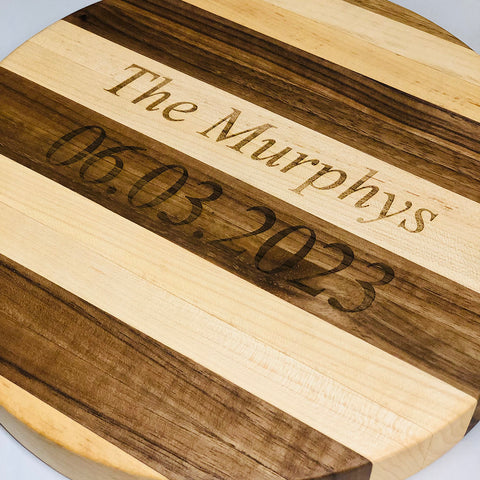
Add custom engraving to any cutting board!
Engraving Prices:
- 1 - 9 characters - $25
- 10 - 20 characters - $40
- > 20 characters custom pricing - call for pricing
- Costs for adding a logo/image dependent on size of graphic. Must provide a vector file, larger images may be an additional cost.
Does your engraving include a logo/image?
If so, please email the NOLA BOARDS project manager a vector file of this graphic. Vector files have the suffix .ai or .eps.
If you cannot obtain a vector file of the desired graphic, NOLA BOARDS may be able to offer image conversion services for a fee. Please email any relevant files to the project manager along with an explanation of your needs info@nolaboards.com.
How large do you want the engraving?
Please provide height for whole engraving.
Specify if it is the height or width measurement that you are providing. If you are not sure, please provide any sort of parameters/explanations that are important to you. If there are multiple engravings on one board, please indicate which measurement is for which engraving. Please be as specific as possible.
What font do you want the lettering in?
See the examples below for our standard options.


Where on the board would you like the engraving (see below)?
If you would like the engraving on the same side of the board as the NOLA BOARDS logo, please note the placement of our logo is usually in either the bottom right or bottom center.

Types of Woods NOLA Boards Uses
NOLA Boards uses only environmentally responsible and renewable woods in making our products. Here is a listing of our most popular types of woods.
Do you have questions about the differences in wood grains?
Visit our Wood Grains page to learn more.
Black Walnut Wood


Prized for its distinctive rich and robust color, black walnut is commonly used in furniture building. It is grown throughout the eastern and central United States.
- Appearance: Light to dark chocolate brown. Often the wood can often has a grey, purple or reddish cast. Creamy yellow sapwood is a common feature as well. Usually has a straight, dense grain, though irregularities are not uncommon.
- Aging Qualities: Becomes grayer and more yellow with age, but only moderately.
- Other Qualities: Strong, hard and durable.
Cherry Wood


Cherry is one of the most highly valued furniture building woods due to its strength, beautiful color, easy workability and the incredibly smooth and glossy finish that it displays when properly sanded. It is grown in the eastern United States, mostly in northern and lake states.
-
Appearance: Light pink to reddish brown with straight, uniform, fine grain.
-
Aging Qualities: Darkens significantly with age.
-
Other Qualities: Highly shock resistant.
Maple Wood


Maple is valued by furniture builders for its workability, consistency, hardness, and easy to paint surface. It is grown in all over the United States, but primarily throughout the eastern states.
- Appearance: Almost white to light grey with a faint yellow hue. Sometimes features grey, fine, uniform grain.
- Aging Qualities: Darkens a little with age.
- Other Qualities: Medium shock resistance.
Sapele Wood


Sapele is a beautiful hardwood that is often compared to (and even marketed as) mahogany due to its rich reddish brown color and denseness. It is grown in tropical regions of west Africa.
-
Appearance: Textured reddish brown grain with golden hues. Interlocked grain with a fine uniform texture and a nice natural luster.
-
Aging Qualities: Color will darken with age.
-
Other Qualities: Very dense and rot resistant.


Cypress trees are iconic in Louisiana, and are incredibly valuable to furniture and home builders due to their remarkable durability and rot resistance. The “sinker” in “sinker cypress” refers to how these logs were pulled from the bottom of a river.
In the late 1800’s through the early 1900’s, when the preferred method of transporting wood to locations downriver from where they were harvested was by lashing the logs together in a crude raft, it was not uncommon for these rafts to break apart and for some logs to sink to the bottom of the river. The cypress logs would lay there for up to a century!
The outer layers of the wood slowly decomposed, but the lack of sunlight and oxygen perfectly preserved the dense, oily heartwood. Sinker cypress is always found in the rivers and bayous of the southern and coastal United States.
-
Appearance: Varies due to the different minerals the wood is exposed to depending on where it has been submerged in water. Usually the wood displays a rich, glossy yellow and greenish hue.
-
Aging Qualities: Darkens to a rich, yellowish brown with age.
-
Other Qualities: Extremely durable and rot resistant. Oily, almost waxy feel to the wood.
White Oak


The most widely used hardwood in the United States, white oak is grown primarily in the eastern United States.
-
Appearance: Creamy white to medium brown heart and sapwood. The heartwood often exhibits an olive colored cast. Has an exceptionally straight and uniform grain.
-
Aging Qualities: Does not darken much with age.
-
Other Qualities: Nearly impervious to liquids and highly rot resistant, white oak has been extensively used for ship timbers, barrels and casks.
How to Care for Your NOLA Board
How to Maintain and How Often

Wooden cutting boards need to be kept clean and daily maintenance is usually a good scrub with hot soapy water after using. Do not soak your boards or any other wooden utensils in water or they'll crack and warp. Absolutely no dishwasher use! Some people use a very weak bleach solution or hydrogen peroxide to clean their boards after they've been used for cutting raw meat as a precaution against bacterial contamination. Depending on how often you use your boards, maintenance should be at least every couple months.
Everyday Use - Absolutely NO dishwasher use!
Simply wash your board with your regular dish soap at your sink and with a scrubber brush. Dry with a cloth.
Do you have questions about the differences in wood grains?
Visit our Wood Grains page to learn more.
Long Term Care (How To Oil and Maintain a Wooden Cutting Board and Wooden Utensils)
Before you start, be sure your boards are very clean. Give them a scrub with lemon and salt. The boards should also be dry before starting.
What You Need:
-
Wooden cutting board, spoons, or other utensils
-
Clean, soft cloth or paper towel
-
Mineral oil or other food-grade oil
- NOLA Boards board conditioner - MINERAL OIL & BEESWAX BOARD CONDITIONER

Instructions:
-
Start with a clean board and utensils. Be sure your cutting board and spoons are as clean as possible and thoroughly dry.
-
Apply the oil. Using a clean, soft cloth or paper towel, apply the oil in an even layer over the wood.
-
Let it soak in. Remove any excess. Leave the oil to soak in, overnight if possible, or for at least a few hours.
-
Apply NOLA Boards board conditioner - MINERAL OIL & BEESWAX BOARD CONDITIONER in circular motion. Remove excess.
- If the board or your spoons feel oily or sticky, buff off any remaining oil with a clean dry cloth or paper towel.